“I need a little time to myself at the moment. I hope you understand.”
It’s clear without being unfriendly.
You haven’t blamed the other person or invented an excuse. You’ve simply explained what you need.
2. Explain That You Need to Recharge
If you’d like to give a little more context, you can explain that you’ve been busy and need some quiet time.
Try saying:
“I’ve had quite a lot going on lately and I need some time on my own to recharge.”
This can be particularly useful with someone who might otherwise wonder whether they’ve done something wrong.
3. Reassure Them It’s Not About Them
Sometimes the other person’s immediate reaction will be:
“Have I done something?”
If they haven’t, say so.
Try saying:
“This isn’t because of anything you’ve done. I just need a bit of time to myself.”
That one sentence can prevent a considerable amount of unnecessary worrying.
4. Tell a Friend You Need Some Space
Perhaps a friend wants to meet frequently, message throughout the day or spend more time together than you’re comfortable with.
You can value the friendship and still want more time alone.
Try saying:
“I really enjoy spending time with you, but I also need quite a bit of time to myself. I might be a little quieter for a few days.”
This makes your need clear without presenting it as criticism of your friend.
5. When You Don’t Want to Go Out This Weekend
Sometimes you’ve had a busy week and the thought of another social engagement isn’t particularly appealing.
If you haven’t already committed to something, you can simply decline.
Try saying:
“Thanks for asking, but I’m going to have a quiet weekend to myself this time.”
You don’t need to invent another appointment to make your answer legitimate.
Having no plans can itself be your plan.
6. When You’ve Already Made Plans
This situation requires a little more consideration.
If you’ve already agreed to meet someone, remember that they’re relying on the arrangement too.
If you decide to cancel, give as much notice as possible.
Try saying:
“I’m sorry to change our plans, but I’ve realised I really need some time to myself this weekend. I wanted to tell you as early as possible.”
If you’d genuinely like to rearrange, you could add:
“Would you like to meet next week instead?”
But only suggest another date if you actually want to.
If this is the situation you’re dealing with, you may also find our guide to How to Back Out of Plans Politely useful.
7. When Someone Keeps Messaging You
Modern communication creates an interesting problem: people can reach us almost constantly.
You don’t necessarily need to answer every message immediately.
If someone expects frequent replies, you can gently reset that expectation.
Try saying:
“I’m going to spend a little less time on my phone for the next few days, so I may be slower replying than usual.”
Or simply:
“I’m having a quiet day today, so I’ll catch up with you later.”
You don’t need to be permanently available just because your phone is.
8. When You Need Space From a Family Member
Family relationships can sometimes come with expectations about how available you should be.
If you need some time alone, try communicating the need without turning it into an accusation.
Try saying:
“I love seeing you, but I’ve got quite a lot going on and need a little time to myself this week.”
If they push for an explanation:
“Nothing’s wrong between us. I just need some quiet time.”
Again, reassurance can prevent your request from being interpreted as rejection.
9. When You Live With Someone
Asking for time alone can be more complicated when you share a home.
You can’t necessarily disappear for several days.
Instead, make your request specific.
Try saying:
“I’d really like an hour or two to myself this evening. Would you mind if I had some quiet time and we caught up later?”
Specific requests are often easier for another person to understand than a vague announcement that you “need space.”
You can also discuss practical ways for both of you to have some uninterrupted personal time.
10. When Someone Takes It Personally
You can communicate perfectly politely and the other person may still feel rejected.
They might ask:
“Are you avoiding me?”
“Have I upset you?”
“Don’t you want to see me anymore?”
If those assumptions aren’t true, reassure them without abandoning what you’ve asked for.
Try saying:
“No, you’ve done nothing wrong. I enjoy spending time with you. I just need some time on my own as well.”
If necessary:
“Please don’t take this as me rejecting you. I’m simply asking for a little time to myself.”
Their feelings matter, but so does your need for personal time.
11. When They Keep Pushing
Occasionally someone will respond to your request by trying to negotiate.
“What about just an hour?”
“I’ll come round anyway.”
“You don’t have to entertain me.”
If you really do want time alone, you may need to be clearer.
Try saying:
“I appreciate that, but I really do want some time to myself today. Let’s catch up another time.”
Or:
“I know you mean well, but I need you to respect that I’d like some time alone.”
You don’t need to produce a new explanation every time someone challenges the original one.
12. When You Want to Suggest Another Time
Needing space doesn’t necessarily mean you don’t want to see the person again.
If you’d genuinely like to reconnect later, saying so can be reassuring.
Try saying:
“I’m going to have a quiet weekend to myself, but I’d love to catch up next week.”
Or:
“I need a few days to myself at the moment. Shall I give you a call next week?”
This communicates both parts of the message:
I want some time alone now.
I still value our relationship.
Do You Have to Explain Why You Need Time Alone?
No.
You can give an explanation if you want to, but you don’t necessarily owe someone a detailed justification for wanting some personal time.
Something as simple as:
“I’m having a quiet evening to myself tonight.”
may be perfectly adequate.
The amount of explanation that’s appropriate will depend on the relationship and circumstances.
Cancelling an important commitment obviously deserves more explanation than declining an invitation for coffee.
Is Wanting Time to Yourself Rude?
Wanting personal time isn’t inherently rude.
How you communicate it matters.
There’s a significant difference between:
“Leave me alone!”
and:
“I’ve had a busy few days and I’d really like a quiet evening to myself.”
Both communicate a desire for space, but they’re likely to produce very different reactions.
Giving reasonable notice, being considerate about existing commitments and avoiding unnecessary blame can make the conversation considerably easier.
Don’t Automatically Invent an Excuse
It’s tempting to say:
“I’m busy.”
“I’ve got an appointment.”
“I’ve got loads of work.”
Sometimes those things are true.
But if what you actually mean is I’d like an evening to myself, it’s worth considering whether you need an excuse at all.
You can simply say:
“Thanks for inviting me, but I’m going to have a quiet evening at home.”
That’s a perfectly understandable choice.
How to Avoid Overcommitting Your Time
If you frequently find yourself wishing you’d protected more of your free time, try pausing before accepting invitations.
Useful phrases include:
“Let me check what else I’ve got planned.”
“Can I get back to you tomorrow?”
“I’m keeping that weekend fairly quiet, so let me think about it.”
“Thanks for asking. I’m not going to commit to anything else just yet.”
These give you time to decide whether you genuinely want to make the commitment.
And if you’ve already agreed before realising you need some space, our guide to How to Say No After You’ve Already Said Yes covers that situation specifically.
When “I Need Space” Can Be Misunderstood
One phrase deserves special attention:
“I need space.”
Depending on the relationship, that can sound much more serious than you intended.
A friend may hear:
“I don’t want to be friends anymore.”
A partner may hear:
“Our relationship is in trouble.”
If all you mean is that you’d like a quiet Saturday afternoon, being more specific can prevent unnecessary confusion.
For example:
“I’ve had a really busy week and I’d like Saturday afternoon to myself. Let’s catch up Sunday.”
That’s much clearer than simply announcing that you “need space.”
Need Help Finding the Right Words?
Sometimes you know exactly what you want.
You just don’t know how to say it without sounding rude.
Our Say No Without Feeling Guilty Kit contains 50 ready-to-use phrases and printable worksheets for everyday situations involving friends, family and colleagues.
The idea is simple: instead of staring at your phone wondering how to word an awkward message, you’ll have practical examples you can adapt.
Wanting some time to yourself doesn’t mean you dislike other people.
Sometimes you simply want an evening without plans, a quiet weekend or a few hours where nobody expects anything from you.
The key is communicating that respectfully.
Be clear about what you’re asking for. Reassure the other person when appropriate. Honour commitments that genuinely matter, and don’t offer alternative plans unless you actually want them.
And remember that you don’t always need a complicated explanation.
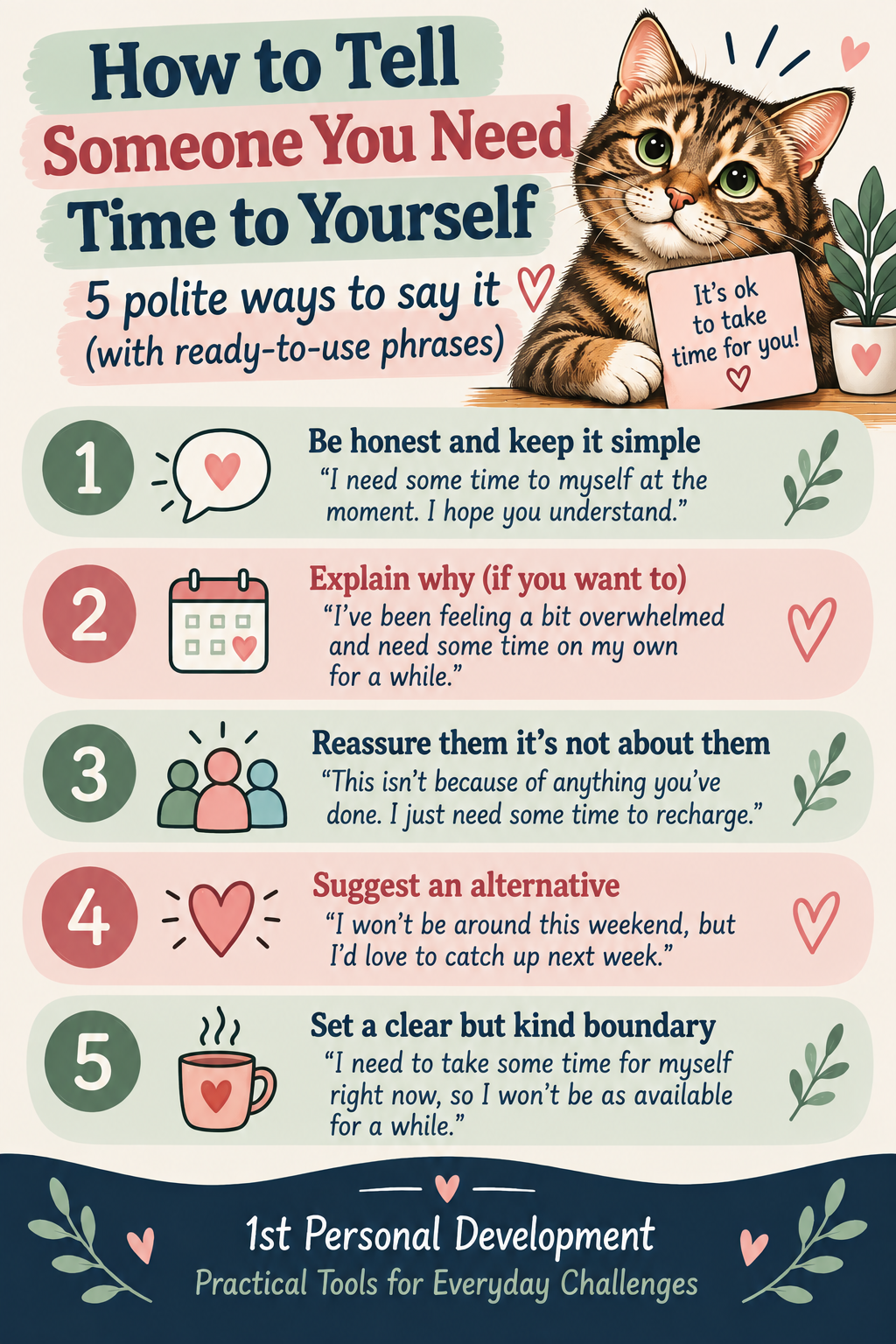 You don’t always need a detailed explanation.