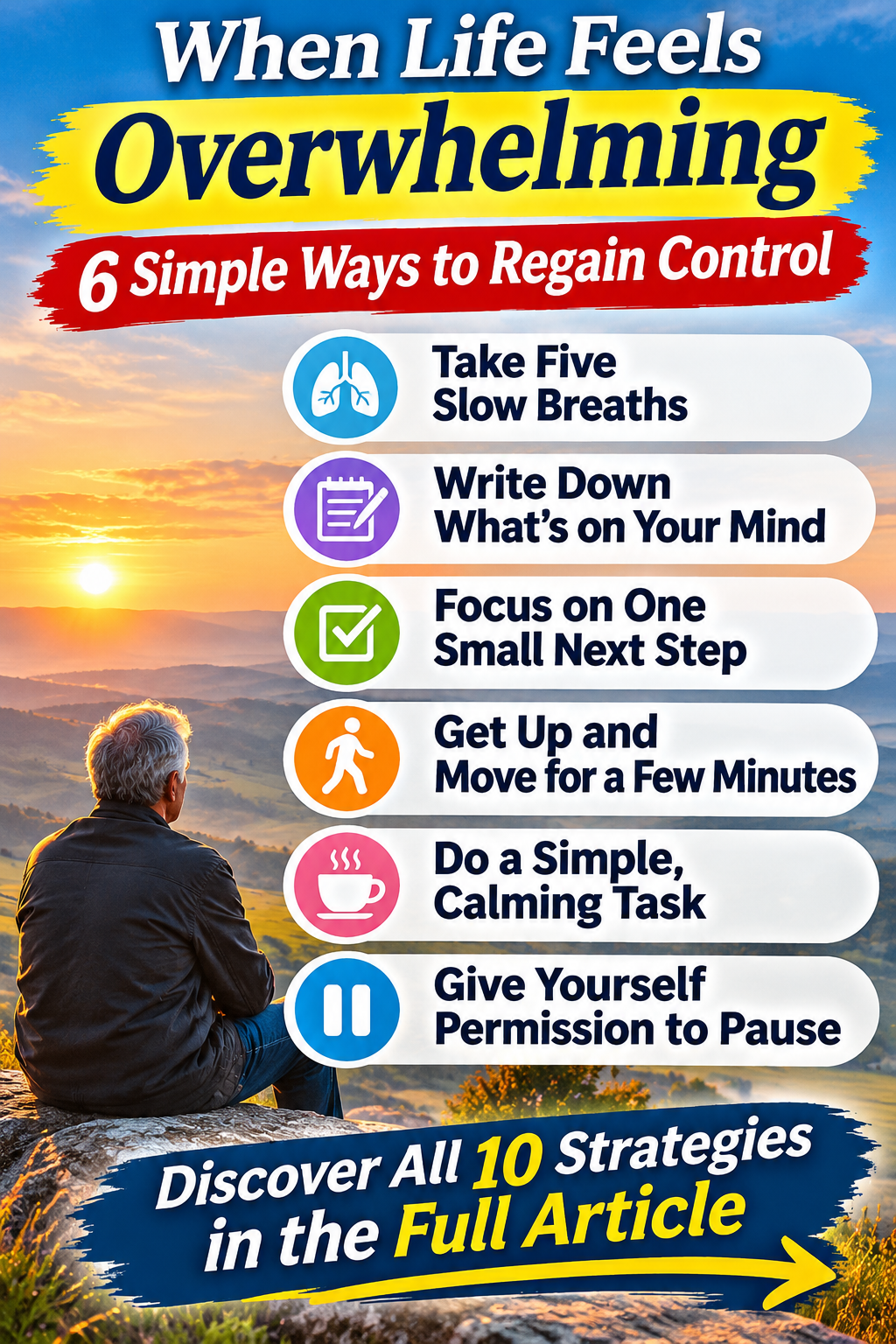
8 Simple Ways to Reduce Stress and Feel More in Control
Feeling stressed by everyday life? Discover eight simple ways to reduce stress, clear your mind and regain a little control without making major changes to your routine.
Some days, life seems determined to test your patience.
You wake up with a list of things to do. Before you’ve finished breakfast, three more problems have appeared. Your phone keeps demanding attention, someone needs a favour, and that thing you were supposed to finish yesterday is still waiting.
Sound familiar?
Stress doesn’t always arrive because something terrible has happened.
Sometimes it’s simply the accumulation of dozens of small demands, worries and interruptions.
And when you’re feeling stressed, even ordinary tasks can seem more difficult than they really are.
The good news is that you don’t necessarily need to make dramatic changes to feel a little better.
Sometimes, a few small adjustments to your day can make a noticeable difference.
When you’re feeling stressed, your breathing can become faster and shallower without you noticing.
Taking a moment to breathe more slowly and comfortably can help you interrupt that feeling of constant urgency.
You don’t need to learn a complicated breathing technique.
Simply find somewhere comfortable, relax your shoulders and take a few gentle breaths.
Try breathing in slowly, then allowing yourself to breathe out without rushing.
Repeat several times, keeping the pace natural and comfortable.
You might not suddenly feel completely relaxed, but even a brief pause can give you a little breathing space — literally!
Try this: Before tackling your next stressful task, take five comfortable breaths and allow yourself a moment to settle.
2. Write It Down to Clear Your Mind
One of the exhausting things about stress is how many thoughts compete for your attention.
You might be thinking about tomorrow’s appointment, an unpaid bill, something someone said yesterday and the dozen things you still need to finish today.
Trying to keep all of that in your head is hard work.
Writing things down can help you organise your thoughts and see what actually needs attention.
Grab a notebook or open a blank document and write whatever is on your mind.
Don’t worry about spelling, grammar or putting things in the right order.
Just get it out of your head and onto the page.
Once you’ve finished, you may discover that some worries don’t need immediate action, while others can be dealt with quite easily.
Try this: Spend five minutes writing down everything that’s bothering you. Then circle just one thing you can realistically do something about today.
3. Get Some Gentle Movement
When you’re stressed, it’s tempting to stay exactly where you are and keep working until everything is finished.
But a little movement can be a useful way to break up a demanding day.
You don’t need to go to the gym or embark on a strenuous workout.
A short walk, a few gentle stretches or simply getting up from your chair can help you change your focus.
If you’ve been staring at a computer screen for hours, even walking into another room for a couple of minutes can feel refreshing.
And if you can get outside, that’s an added bonus.
Try this: Set yourself a reminder to get up and move around regularly, particularly if you spend much of the day sitting.
4. Do Something You Enjoy
When life gets busy, enjoyable activities are often the first things we abandon.
We tell ourselves we’ll relax when we’ve finished everything.
Unfortunately, there’s usually something else waiting.
Making a little time for something enjoyable isn’t necessarily a luxury.
It can be a useful way to create a break from the demands of everyday life.
Perhaps you enjoy reading, listening to music, gardening, cooking or spending time with a pet.
Whatever it is, choose something that genuinely appeals to you.
It doesn’t have to be productive.
You don’t need to learn a new skill, improve yourself or achieve anything.
Sometimes it’s enough simply to enjoy the moment.
Try this: Make time for fifteen minutes of something you enjoy today, without feeling obliged to turn it into another task.
5. Reduce Distractions
Modern life provides an almost unlimited supply of interruptions.
Emails arrive.
Phones buzz.
Social media notifications appear.
Someone sends a message that apparently requires an immediate response.
Before long, your attention has been pulled in six different directions.
If you’re already feeling stressed, these constant interruptions can make it harder to concentrate.
Try creating a short period of uninterrupted time.
Put your phone on silent.
Close unnecessary browser tabs.
Turn off notifications that aren’t genuinely important.
If possible, find somewhere quiet to work or relax.
You don’t have to disconnect from the world for an entire day.
Even twenty minutes without unnecessary interruptions can make a difference.
Try this: Choose one period today when you’ll deliberately reduce distractions and focus on just one activity.
6. Set a Small, Realistic Goal
Stress often becomes worse when you feel that you’re falling behind.
Perhaps your to-do list contains twenty tasks, and you’re convinced that all twenty must be completed today.
But setting unrealistic expectations can create more pressure than necessary.
Instead, choose one small goal that you can reasonably achieve.
It might be replying to an important email, sorting out one bill, making a phone call or tidying a small area of your home.
Make the goal specific.
Rather than saying, “I need to get organised,” try, “I’ll spend ten minutes sorting the paperwork on my desk.”
A manageable goal gives you something concrete to focus on.
And completing it can provide a useful sense of progress.
Try this: Write down one realistic goal for today. Once you’ve completed it, decide whether you have the time and energy for another.
7. Look After Your Sleep
Everything can feel more difficult when you’re tired.
Small annoyances become bigger.
Concentration becomes harder.
Decisions that would normally be straightforward can seem exhausting.
Although stress itself can interfere with sleep, paying attention to your sleep habits may help.
Try keeping reasonably consistent sleeping and waking times.
Give yourself a little time to wind down before bed.
If possible, avoid turning your bedroom into an extension of your office.
And if your mind is full of tomorrow’s tasks, try writing them down before going to bed.
You don’t need a perfect bedtime routine.
Start with one small change that feels manageable.
Try this: Choose a regular time to begin winding down in the evening, even if it’s only fifteen minutes before you normally go to bed.
8. Spend a Few Minutes Outdoors
Sometimes the simplest way to change your mood is to change your surroundings.
Spending a little time outdoors can give you a break from screens, indoor distractions and the same four walls.
You don’t need to live near a forest or beautiful countryside.
A garden, local park or short walk around your neighbourhood can be enough.
Pay attention to what’s around you.
Notice the sky, the temperature, the sounds and the things you might normally walk past without seeing.
Rather than using the time to mentally rehearse everything you need to do, see whether you can give your surroundings a little attention.
Try this: Spend five or ten minutes outside today, preferably without checking your phone.
A Simple 10-Minute Stress Reset
If you’re feeling particularly stressed and don’t know where to begin, try combining a few of these ideas into one short routine.
Minutes 1–2: Pause and breathe
Sit comfortably and take a few slow, natural breaths.
Minutes 3–4: Write down your thoughts
Get the worries and unfinished tasks out of your head.
Minutes 5–7: Move
Walk around, stretch gently or step outside.
Minutes 8–9: Choose one priority
Look at what you’ve written and identify one small, realistic next step.
Minute 10: Begin
Take the first action towards completing it.
You don’t need to solve everything in ten minutes.
The purpose is simply to interrupt the feeling of being pulled in every direction and give yourself a more manageable starting point.
What If Your Stress Doesn’t Go Away?
These simple strategies can be helpful for dealing with everyday pressures, but they won’t remove every source of stress.
Sometimes the problem isn’t that you’re failing to relax.
It’s that you’re dealing with too many demands, insufficient support or circumstances that genuinely need to change.
If stress is persistent, affecting your health or making everyday life difficult, consider speaking with a qualified healthcare professional.
You may also need to review your responsibilities, set firmer boundaries or ask for practical help.
Taking care of yourself isn’t always about finding a better way to cope with an unreasonable situation.
Sometimes it’s about changing the situation where you can.
More Ways to Feel in Control
If stress is leaving you feeling overwhelmed, you might also find this article helpful:
10 Quick Ways to Calm Your Mind When You Feel Overwhelmed
Discover practical techniques for settling racing thoughts, reducing mental overload and making the next few minutes feel more manageable.
And if you’re struggling to organise your responsibilities or get back on track, my Get Your Life Back on Track Kit — 72-Hour Reset offers a structured three-day plan with worksheets and small daily actions.