How to Say No When Someone Asks to Borrow Money: 12 Polite Replies
Someone asks if they can borrow some money.
And suddenly, a perfectly ordinary conversation becomes rather awkward.
Perhaps it’s a friend who’s temporarily short of cash. Maybe a family member needs help with a bill. Or perhaps it’s someone who has borrowed from you before and hasn’t exactly been enthusiastic about paying it back.
Whatever the circumstances, you may find yourself wanting to say no but struggling to find the words.
How do you tell someone you don’t want to lend them money without damaging the relationship?
You don’t necessarily need an elaborate excuse. A polite, clear answer is often better than a complicated explanation.
Here are 12 ready-to-use responses you can adapt to your situation.
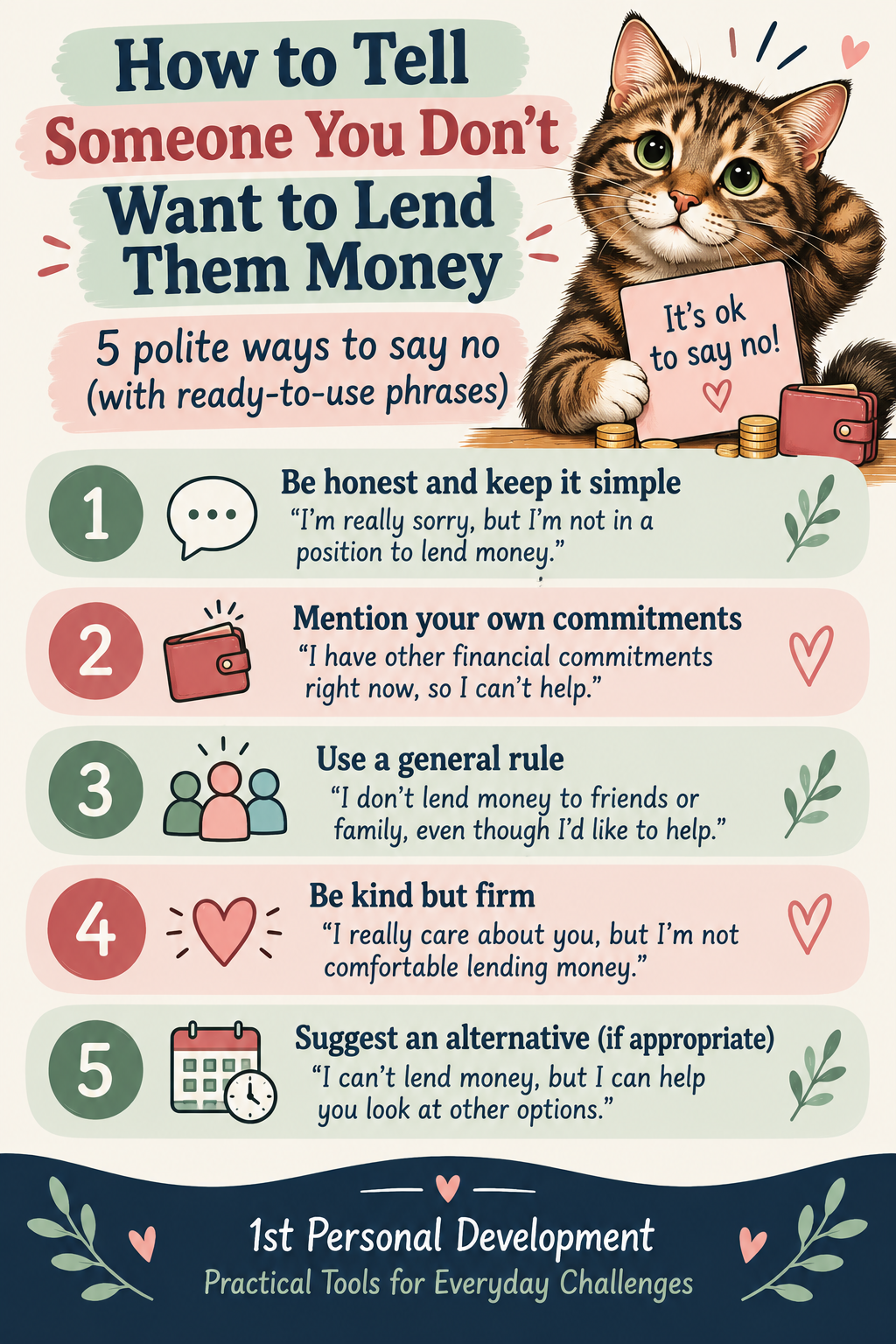
“I’m really sorry, but I’m not in a position to lend money.”
It’s polite, straightforward and doesn’t invite a discussion about exactly how much money you have.
If someone asks why, you can simply repeat that lending money isn’t something you’re able to do.
2. Mention Your Own Financial Commitments
Perhaps you have enough money in your bank account to technically make the loan, but that doesn’t mean the money is available to lend.
You may have bills, savings goals or other commitments.
Try saying:
“I’ve got my own financial commitments at the moment, so I’m afraid I can’t help with a loan.”
You don’t need to provide a breakdown of your finances to justify your decision.
3. Have a General Rule About Lending Money
This can be particularly useful if you frequently receive requests from friends or relatives.
Try saying:
“I’ve made it a rule that I don’t lend money to friends or family. I hope you understand.”
A general rule makes the decision less personal.
You’re not saying I won’t lend money to you.
You’re saying I don’t lend money.
That distinction can sometimes make the conversation easier.
4. Be Kind but Firm
It’s possible to care about someone’s situation without becoming their lender.
Try saying:
“I’m sorry you’re dealing with this. I really care about you, but I’m not comfortable lending money.”
This acknowledges their difficulty without changing your answer.
Empathy and agreement are not the same thing.
5. Don’t Say “Maybe” When You Mean “No”
When we don’t want to disappoint someone, it’s tempting to say:
“I’ll see.”
“Perhaps.”
“Let me think about it.”
That’s useful if you genuinely need time to decide.
But if you already know you don’t want to lend the money, delaying your answer can make the situation more uncomfortable.
A polite no today may be kinder than a reluctant no three days from now.
6. When a Friend Asks to Borrow Money
Money between friends can complicate an otherwise good relationship.
If you don’t want to introduce borrowing and repayment into the friendship, you can say so.
Try saying:
“I value our friendship, and I’ve decided I don’t want to mix lending money with friendships. I hope you understand.”
You don’t need to imply that you distrust your friend.
You can simply decide that personal lending isn’t something you’re comfortable with.
7. When a Family Member Asks to Borrow Money
Family requests can be especially difficult because saying no may come with additional expectations or pressure.
You might hear:
“But we’re family.”
“I’d do it for you.”
“I only need it until payday.”
If you’ve decided not to lend the money, try keeping your response calm and brief.
Try saying:
“I understand you’re in a difficult position, but I’m not able to lend you the money.”
If they continue:
“I know this isn’t the answer you wanted, but I’m not going to be able to help financially.”
You don’t have to win an argument about whether you should lend the money.
You simply need to communicate your decision.
8. When Someone Hasn’t Repaid You Before
This one can be particularly uncomfortable.
Someone already owes you money — and now they’re asking for more.
You can address the situation directly.
Try saying:
“I’m not comfortable lending any more money while the previous amount is still outstanding.”
That’s a reasonable boundary.
You may also want to use the conversation to agree how and when the existing debt will be repaid.
9. When You Can Afford It but Still Don’t Want To
This is an important distinction.
Being able to afford something doesn’t automatically create an obligation to pay for it.
Perhaps the person asking knows that you’re financially comfortable.
That can make saying no feel harder.
But you don’t need to pretend you’re short of money.
Try saying:
“I appreciate you asking me, but lending money isn’t something I’m comfortable doing.”
Your bank balance doesn’t need to become part of the conversation.
10. When Someone Says “It’s Only £20”
Small amounts can sometimes be surprisingly difficult to refuse.
The other person may make the request sound insignificant:
“It’s only £20.”
“I’ll give it back Friday.”
“You won’t even notice it.”
Rather than debating whether the amount is large or small, return to your decision.
Try saying:
“I understand it isn’t a large amount, but I don’t lend money. I’m sorry.”
A boundary doesn’t necessarily have to change according to the size of the request.
11. Offer Another Kind of Help — If You Want To
Saying no to lending money doesn’t mean you can’t help in another way.
Depending on the circumstances, you might offer practical assistance.
Try saying:
“I can’t lend you the money, but I’m happy to help you look at some other options.”
That might mean helping someone work through a budget, find information or make a telephone call.
But there’s an important phrase here:
if you want to.
Don’t replace an unwanted financial commitment with another obligation you don’t want.
Sometimes your answer can simply be no.
12. What to Say If They Keep Asking
Some people accept a no immediately.
Others start negotiating.
“What about half?”
“I promise I’ll pay you next week.”
“Why not?”
If you’ve made your decision, you don’t need a new explanation for every objection.
Try saying:
“I understand why you’re asking, but my answer is still no.”
Or:
“I’m sorry I can’t help with the money, but my decision isn’t going to change.”
Repeating a calm answer can be more effective than producing increasingly elaborate explanations.
Do You Need to Give a Reason?
Not always.
A request to borrow money doesn’t automatically entitle someone to detailed information about your finances.
For many everyday situations, this is enough:
“I’m sorry, but I can’t lend you the money.”
You can add an explanation when you think it would be helpful, but avoid feeling that you must produce a sufficiently convincing defence before you’re allowed to say no.
Should You Lend Money to Friends or Family?
That’s a personal decision rather than a question with one universal answer.
Some people are perfectly comfortable lending money to people they know. Others have a firm rule against it.
If you’re considering saying yes, it can be useful to think about what would happen if the money wasn’t repaid when expected.
Ask yourself:
Can I genuinely afford to be without this money?
What happens if repayment is late?
Could this affect our relationship?
Are we both clear about when repayment is expected?
Am I agreeing because I want to, or because I feel pressured?
For larger amounts, consider getting appropriate professional advice and putting any agreement in writing rather than relying on assumptions.
What If You Actually Want to Give Them the Money?
Sometimes you may want to help someone but don’t want the relationship to become centred around a debt.
If you can genuinely afford it, one possibility is to give a smaller amount rather than lend it.
For example:
“I can’t lend you £200, but I’d be happy to give you £30 towards it. You don’t need to repay me.”
That’s entirely optional.
Don’t give away money you need yourself, and don’t feel that refusing a loan means you must offer a gift instead.
How to Avoid Being Put on the Spot
Requests for money can catch you by surprise.
You don’t have to answer immediately.
If you genuinely need time to consider the request, try:
“Let me think about that and get back to you.”
Or:
“I need to check my own finances before I answer.”
This gives you space to make a deliberate decision rather than saying yes because the silence feels uncomfortable.
Just remember to give the person an answer once you’ve decided.
When Saying No Feels Guilty
You may feel uncomfortable refusing someone you care about, particularly if they’re experiencing genuine financial difficulty.
But feeling uncomfortable doesn’t necessarily mean you’ve made the wrong decision.
You can care about someone’s situation while deciding that lending them money isn’t right for you.
Try separating these two thoughts:
“I wish they weren’t having this problem.”
and
“Therefore, I must lend them money.”
The first doesn’t automatically require the second.
Need More Ways to Say No?
Sometimes you know perfectly well that you want to decline a request.
The difficult part is finding the words.
Our Say No Without Feeling Guilty Kit contains 50 ready-to-use phrases and printable worksheets for everyday situations involving friends, family and colleagues.
It’s designed to give you practical wording you can adapt when you’re put on the spot.
Saying no when someone asks to borrow money can feel awkward because money, relationships and emotions are all involved at once.
But a complicated excuse usually isn’t necessary.
Keep your answer polite. Keep it reasonably brief. Acknowledge the person’s situation if appropriate, but don’t make promises you’re uncomfortable keeping.
And if you know you don’t want to lend the money, remember one particularly useful sentence:
“I’m sorry, but I’m not in a position to lend money.”
 You don’t always need to explain your finances.