How to Decline an Invitation Politely: 15 Ready-to-Use Replies
You’ve been invited somewhere.
Perhaps it’s a birthday party, a family gathering, a dinner with friends or an event organised by someone at work.
There’s just one problem.
You don’t want to go.
You might have other commitments, need a quiet weekend or simply not fancy the event.
But now you’re wondering how to decline the invitation without sounding rude, upsetting the person who invited you or finding yourself agreeing to something you’d rather avoid.
The good news is that you don’t need an elaborate excuse.
Often, a polite thank-you followed by a clear answer is all that’s required.
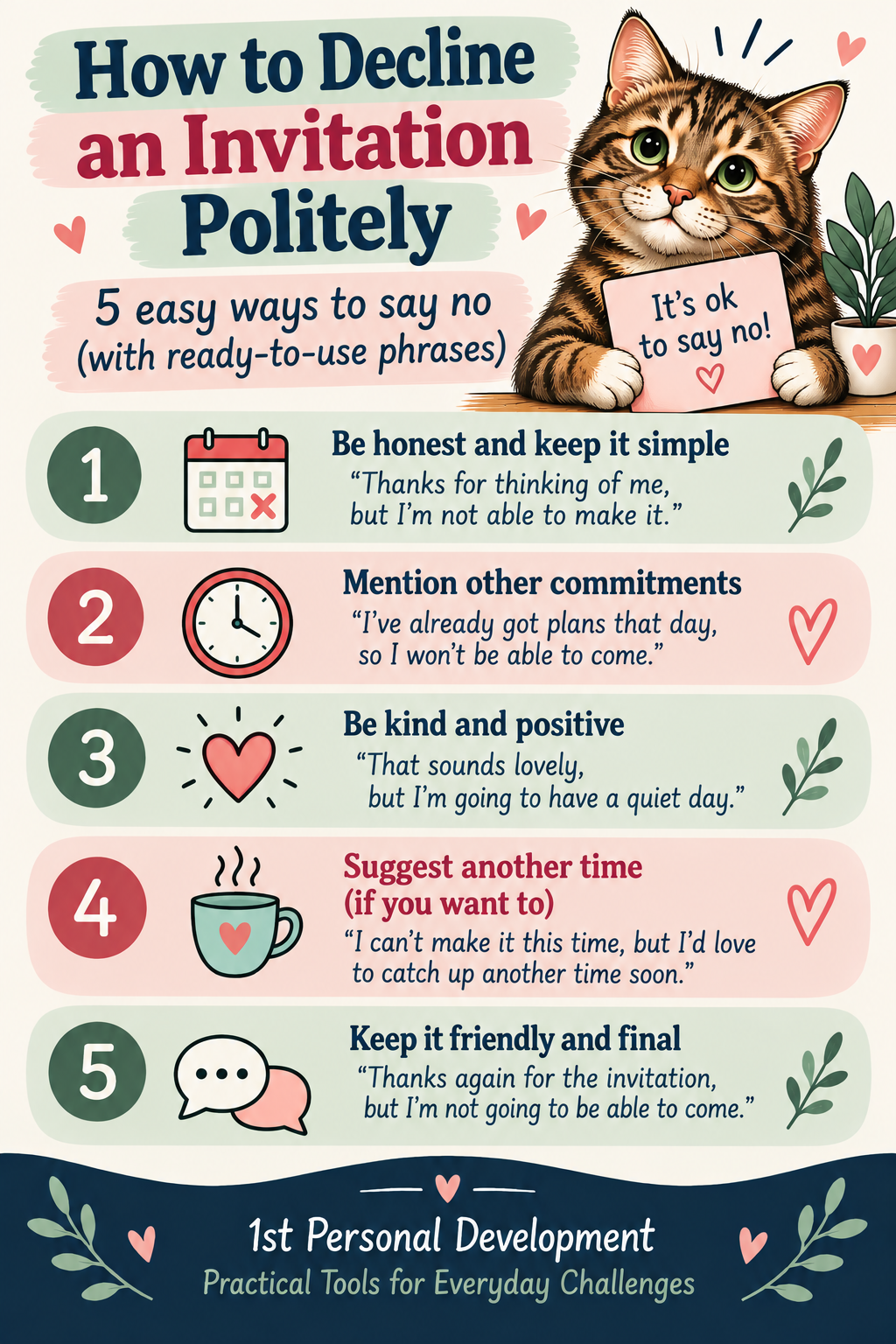
Here are 15 ready-to-use replies you can adapt to different situations.
“Thank you so much for inviting me, but I won’t be able to make it. I hope you have a lovely time!”
This works for many everyday invitations.
It’s friendly, straightforward and doesn’t require a detailed explanation.
2. When You Don’t Want to Give a Reason
You don’t always have to explain why you’re declining.
Try saying:
“That’s very kind of you to invite me. I’m going to give it a miss this time, but thank you for thinking of me.”
Notice that you haven’t invented another appointment or suggested you’re unavailable when you aren’t.
You’ve simply declined.
3. When You’ve Already Got Plans
If you genuinely have another commitment, you can mention it.
Try saying:
“Thanks for the invitation! I’ve already got plans that day, so I won’t be able to come. I hope it goes brilliantly.”
There’s no need to explain what those plans involve unless you want to.
4. When You Want a Quiet Weekend
Sometimes you simply don’t want another social engagement.
That’s a perfectly understandable reason to decline an invitation.
Try saying:
“Thanks so much for asking, but I’m keeping this weekend free for some quiet time. I hope you have a great time!”
You don’t need to invent a busy diary to justify wanting a little time to yourself.
5. When a Friend Invites You Out
You may enjoy someone’s company but not feel like going out on this particular occasion.
Try saying:
“Thanks for thinking of me! I’m going to stay in this time, but I hope you have a brilliant evening.”
You can be warm and appreciative without accepting the invitation.
6. When You’d Genuinely Like to Meet Another Time
Perhaps the invitation doesn’t suit you, but you’d still like to see the person.
Try saying:
“I can’t make Saturday, unfortunately, but I’d love to catch up another time. Would you fancy coffee next week?”
Only suggest another arrangement if you genuinely want to make it.
Otherwise, you risk replacing one unwanted commitment with another.
7. When You Don’t Want to Rearrange
This is a situation that catches many people out.
You decline an invitation, then feel obliged to suggest another date.
But you don’t always need to.
Try saying:
“Thank you for inviting me. I’m going to pass this time, but I really appreciate you asking.”
It’s friendly without creating another obligation.
8. How to Decline a Party Invitation Politely
Parties can involve considerable planning, so it’s thoughtful to respond promptly.
Try saying:
“Thank you so much for the invitation! I’m sorry I won’t be able to attend, but I hope you have a wonderful party.”
If there’s an RSVP date, try to respond before the deadline.
That helps the organiser make accurate arrangements.
9. How to Decline a Dinner Invitation
Dinner invitations can be more personal, particularly when someone is cooking specifically for you.
Try saying:
“That’s really kind of you to invite me for dinner. I’m afraid I won’t be able to come, but thank you so much for thinking of me.”
If you know the person well, a personal message or telephone call may feel more appropriate than a very brief reply.
10. How to Decline a Family Invitation
Family gatherings can sometimes come with expectations that make saying no more difficult.
Try saying:
“Thanks for inviting me. I know everyone will be getting together, but I’m not going to be able to join you this time. I hope you all have a lovely day.”
You can acknowledge the occasion without turning your answer into a debate.
11. How to Decline a Work Social Event
An invitation from colleagues or your employer can feel more complicated than a casual social invitation.
If attendance is optional, a professional and friendly response is usually appropriate.
Try saying:
“Thank you for organising the event. Unfortunately, I won’t be able to attend this time, but I appreciate the invitation.”
If attendance is part of your actual work responsibilities, check expectations rather than assuming the event is optional.
12. When the Invitation Is Expensive
Perhaps you’ve been invited to an event that involves expensive tickets, travel or accommodation.
You don’t necessarily have to spend money simply because someone has invited you.
Try saying:
“Thank you for inviting me. It sounds like a lovely event, but it’s not something I can commit to financially at the moment.”
Or, if you’d rather keep your finances private:
“Thanks so much for thinking of me, but I’m going to pass this time.”
You can decline without providing details of your bank balance.
13. When Someone Keeps Pressuring You
Sometimes the person inviting you doesn’t accept your first answer.
They might say:
“Go on, it’ll be fun!”
“Everyone else is coming!”
“You never come to anything!”
If you’ve already made your decision, try repeating it calmly.
Try saying:
“I appreciate you asking, but I’m definitely going to give it a miss this time. I hope you all have a great evening.”
You don’t need to invent a new explanation every time someone asks again.
14. When You Want to Be Especially Tactful
Some invitations are particularly meaningful to the person organising them.
Perhaps they’ve put considerable effort into arranging a celebration or personally invited you to something important.
Try saying:
“Thank you so much for including me. I really appreciate the invitation, and I’m sorry I won’t be able to attend. I hope it’s a wonderful occasion.”
Acknowledging the invitation’s significance can help you communicate your decision respectfully.
15. When You Need Time Before Answering
Sometimes you’re not sure whether you want to attend.
Rather than automatically agreeing, give yourself time to decide.
Try saying:
“Thanks so much for inviting me. Can I check a few things and get back to you tomorrow?”
This is particularly useful if you have a habit of saying yes before considering whether you actually want to go.
Just remember to follow up when you’ve promised an answer.
A Simple Formula for Declining Almost Any Invitation
If none of the examples above quite fits your situation, try this three-part approach.
1. Thank the person.
“Thank you for inviting me.”
2. Give a clear answer.
“I’m afraid I won’t be able to come.”
3. End warmly.
“I hope you have a lovely time.”
Put together, you get:
“Thank you for inviting me. I’m afraid I won’t be able to come, but I hope you have a lovely time.”
That’s often all you need.
Do You Have to Give an Excuse?
No.
It’s tempting to invent an excuse because saying “I don’t want to” can feel uncomfortable.
But you don’t necessarily need to provide a detailed explanation.
For example:
“Thanks for inviting me, but I’m going to have a quiet evening at home.”
is a perfectly reasonable response.
You don’t have to claim you’re ill, working late or visiting relatives if none of those things is true.
A polite answer is generally better than a complicated excuse you might later regret.
How to Decline an Invitation Without Hurting Someone’s Feelings
There’s no wording that can guarantee another person won’t feel disappointed.
However, you can reduce unnecessary awkwardness by being considerate.
Respond promptly. Don’t leave someone waiting indefinitely for an answer, particularly when they’re organising an event.
Show appreciation. A simple thank-you acknowledges that the person thought of you.
Be clear. Avoid saying “maybe” when you already know the answer is no.
Don’t over-explain. A long explanation can sometimes make a straightforward decision feel more complicated.
Avoid promising another meeting unless you mean it. You don’t have to arrange something else simply to soften your refusal.
The aim isn’t to control how the other person feels. It’s to communicate respectfully.
What If Someone Gets Upset?
Even a polite refusal can disappoint someone.
Perhaps they were particularly looking forward to seeing you.
You can acknowledge that without automatically changing your decision.
Try saying:
“I understand you’re disappointed, and I’m sorry I won’t be there. I really appreciate you inviting me.”
If they continue to pressure you, it’s reasonable to repeat your answer calmly.
Remember that declining an invitation isn’t necessarily a criticism of the person who extended it.
What’s the Difference Between Declining and Cancelling?
There’s an important distinction.
Declining an invitation means you haven’t agreed to attend.
Cancelling plans means you’ve already accepted and are now withdrawing.
Cancelling may require more consideration because someone could have made arrangements based on your original agreement.
If you’ve already accepted an invitation and now need to change your mind, read our related guide:
How to Back Out of Plans Politely: 12 Messages You Can Actually Use
That article covers how to communicate a cancellation, deal with disappointment and consider the practical consequences.
How to Stop Automatically Saying Yes
If you regularly accept invitations you don’t want, try introducing a short pause before answering.
Instead of immediately saying yes, use one of these phrases:
“Let me check my diary.”
“Can I get back to you tomorrow?”
“I’ll have a think and let you know.”
“Thanks for asking. I’m not sure yet.”
“I don’t want to commit until I’ve checked a few things.”
These simple responses give you time to consider whether you genuinely want to attend.
They can also prevent the more awkward situation of agreeing and then having to cancel.
Need More Help Finding the Right Words?
Sometimes you know you want to say no.
The difficult part is finding a polite way to communicate your decision.
Our Say No Without Feeling Guilty Kit includes 50 ready-to-use phrases and printable worksheets for everyday situations involving friends, family and colleagues.
It’s designed to provide practical examples you can adapt when you’re struggling to find the right words.
 Sometimes the easiest answer is the best one.