How to Respond to Intrusive Questions Politely: 15 Ready-to-Use Replies
We’ve all been there.
You’re enjoying a perfectly pleasant conversation when somebody suddenly asks a question that makes you wish you’d stayed at home.
“How much do you earn?”
“Why aren’t you married yet?”
“Have you put on weight?”
“Why don’t you have children?”
And then comes that awkward moment when you’re trying to decide whether to answer honestly, change the subject or pretend you didn’t hear.
The good news is that you don’t have to answer every question someone asks you.
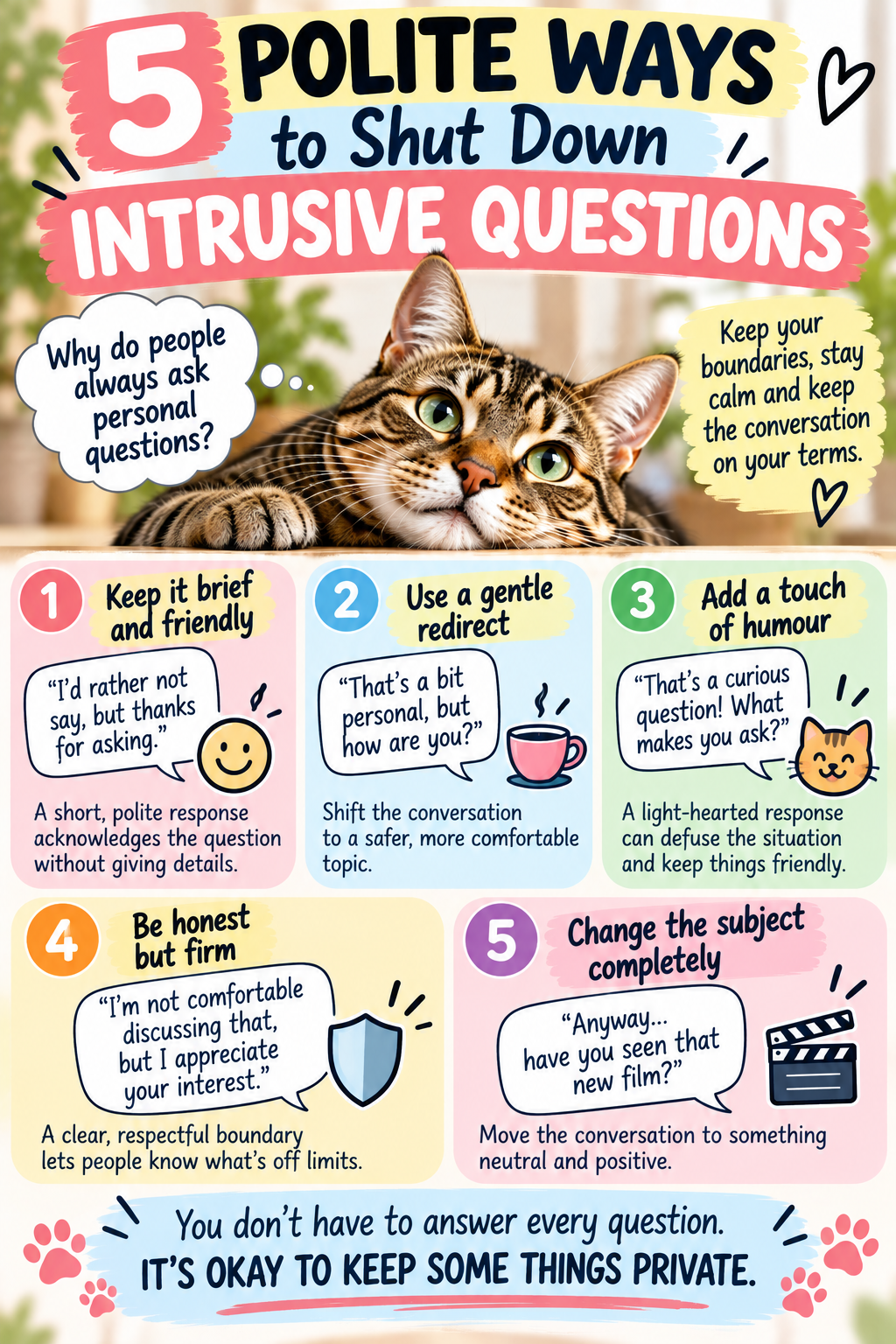
You can be polite without revealing personal information. You can be friendly without explaining yourself. And you can set boundaries without turning an ordinary conversation into an argument.
Here are 15 practical replies you can use when someone asks a question that’s a little too personal.
Not everyone who asks a personal question is deliberately being rude.
Some people are naturally curious. Others think they’re being friendly, offering advice or showing concern.
And, of course, some people simply have a remarkable talent for asking exactly the wrong question at exactly the wrong moment.
Whatever their intentions, you’re entitled to decide what information you share.
The trick is to have a few comfortable responses ready, so you’re not caught off guard.
1. When Someone Asks About Your Money
Money is one of those subjects that can become uncomfortable very quickly.
Whether someone wants to know your salary, savings, debts or the price of your latest purchase, you’re under no obligation to provide the details.
Try these replies:
Reply 1 — Friendly and brief
“I’m doing alright, thanks for asking!”
Reply 2 — Polite boundary
“I tend to keep my finances private, if you don’t mind.”
Reply 3 — Light-hearted
“Not nearly enough to retire to the Bahamas just yet!”
The humorous option works particularly well when you want to move the conversation along without making things awkward.
2. When Someone Asks About Your Relationship Status
“Why are you still single?”
“When are you getting married?”
“Are you seeing anyone?”
Questions about relationships can feel surprisingly personal, especially when they’re asked repeatedly.
Reply 4 — Calm and confident
“I’m happy with where things are at the moment.”
Reply 5 — Gentle redirect
“Nothing to announce! How are things going with you?”
Reply 6 — Clear but friendly
“I’d rather keep my personal life to myself, but thanks for asking.”
You don’t need to justify your relationship choices to satisfy somebody else’s curiosity.
3. When Someone Comments on Your Appearance
Unsolicited questions about weight, ageing, clothing or appearance can be particularly unwelcome.
Even when somebody believes they’re being helpful, that doesn’t mean you have to entertain the conversation.
Reply 7 — Short and neutral
“I’d rather not discuss my appearance, thanks.”
Reply 8 — Friendly but firm
“I’m comfortable making my own choices about that.”
Reply 9 — Change the subject
“Anyway, have you been anywhere interesting lately?”
Sometimes a straightforward change of subject is all that’s needed.
And if someone continues making personal comments after you’ve asked them to stop, it’s perfectly reasonable to be more direct.
4. When Someone Asks About Your Family Plans
Questions about having children, family relationships and private family circumstances can touch on subjects people know very little about.
It’s worth remembering that you never know what somebody else might be dealing with.
If you’re on the receiving end, these responses can help.
Reply 10 — Simple and polite
“That’s something I’d rather keep private.”
Reply 11 — Gentle deflection
“We’re just taking life as it comes.”
Reply 12 — Firm boundary
“I know you mean well, but that’s not something I want to discuss.”
Notice that none of these replies requires a lengthy explanation.
That’s deliberate.
5. When Someone Won’t Stop Asking
Occasionally, a polite hint doesn’t work.
You’ve changed the subject. You’ve smiled. You’ve given a vague answer.
And they’re still asking.
This is when a clearer boundary may be useful.
Reply 13 — Repeat your boundary
“As I mentioned, I’d rather not talk about that.”
Reply 14 — Be direct without being rude
“I appreciate your interest, but I’m not comfortable answering that question.”
Reply 15 — End the conversation politely
“Let’s leave that there and talk about something else.”
You don’t have to invent an excuse or provide additional details.
Sometimes repeating a calm, clear response is the most effective approach.
The Three Levels of a Polite Boundary
One useful technique is to think of your responses in three levels.
Level 1: Gentle deflection
Best when the question is mildly awkward and you want to keep things friendly.
For example:
“Oh, nothing exciting to report! How about you?”
Level 2: Polite but clear
Useful when the question is more personal or somebody hasn’t taken the hint.
For example:
“That’s something I prefer to keep private.”
Level 3: Firm boundary
Appropriate when somebody continues pushing after you’ve already declined to answer.
For example:
“I’ve said I’d rather not discuss it. Please respect that.”
You can start gently and become firmer if necessary.
The important thing is to choose a response that feels natural to you.
Five Tips for Handling Nosy Questions
Knowing what to say is helpful, but how you say it can make a difference too.
1. Keep your answer short. Long explanations can create opportunities for more questions.
2. Don’t apologise unnecessarily. Preferring privacy isn’t something you need to apologise for.
3. Use a calm tone. You can be firm without sounding aggressive.
4. Change the subject when appropriate. A simple “Anyway, how was your weekend?” can work wonders.
5. Remember that you can walk away. If someone repeatedly ignores your boundaries, you don’t have to remain in the conversation.
You don’t need to use all five techniques every time. Choose the one that fits the situation.
What If You Feel Guilty for Not Answering?
Some people find it difficult to refuse personal questions because they worry about appearing unfriendly.
But there’s an important difference between being rude and maintaining your privacy.
Being rude might involve deliberately insulting or embarrassing somebody.
Setting a boundary simply means deciding what you’re comfortable discussing.
You can acknowledge someone’s curiosity without satisfying it.
You can appreciate their concern without sharing the details.
And you can remain a kind, considerate person while keeping parts of your life private.
Politeness doesn’t require unlimited access to your personal information.
A Quick Exercise: Prepare Your Own Replies
Think of three questions people occasionally ask that you’d prefer not to answer.
For each one, write down:
A gentle response.
A polite but clear response.
A firmer response if the questioning continues.
Practise saying them aloud a couple of times.
It might feel slightly strange at first, but having a few phrases ready can make awkward conversations much easier to navigate.
Final Thoughts
Intrusive questions are an unavoidable part of life.
Fortunately, answering them isn’t.
Whether somebody is asking about your money, relationships, appearance or personal circumstances, you have every right to choose what you share.
Sometimes a smile and a change of subject will do the trick.
Other times, you’ll need a clearer boundary.
Either way, remember:
You can be polite, friendly and respectful without answering questions you’d rather keep private.
And that’s a useful skill to have.
Want More Ready-to-Use Replies?
If you’d like more examples for different situations, we’ve created the How to Respond to Intrusive Questions Toolkit.
It’s an 18-page printable PDF containing 50 polite and firm replies across 10 everyday situations, along with a tone ladder, quick-reference guide and exercises for preparing your own responses.
Whether you’re dealing with nosy relatives, awkward colleagues or overly curious acquaintances, it’s designed to help you find the right words.
 You can be polite without revealing personal information. You can be friendly without explaining yourself. And you can set boundaries without turning an ordinary conversation into an argument.